
View Providers
Hip replacement is surgery to repair a diseased or injured hip joint. The hip is a ball-and-socket joint.
The goal of hip replacement surgery, also known as hip arthroplasty, is to relieve pain and restore the hip’s movement and function.
Are There Other Treatment Options?
In most cases not involving hip fracture, doctors recommend less invasive treatments to restore the hip’s range of motion and reduce pain. Less invasive treatments include exercise, walking aids, and oral or injected medications. If less invasive treatments don’t provide adequate relief, your doctor may try less complex corrective surgery before hip replacement.
Ask your doctor about all of your treatment options and consider getting a second opinion before deciding on surgery.
When to Consider Hip Replacement
You may want to consider hip replacement if the hip joint damage causes pain and interferes with daily activities despite less invasive treatment.
Your doctor may decide that you are a good candidate for hip replacement if:
-
The hip joint damage is caused by a medical condition, such as osteoarthritis, rheumatoid arthritis, osteonecrosis, or bone tumors.
-
The hip joint damage is caused by an injury or fracture.
-
Nonsurgical management like exercise, walking aids, and anti-inflammatory medications hasn’t worked.
- Other surgical options failed to offer adequate relief.
If you decide on surgery, ask if you are a good candidate for minimally invasive surgery. It can involve a faster recovery and less pain than open surgery.
Who Is NOT a Good Candidate for Hip Replacement?
You may not be a good candidate if:
-
You have a chronic disorder, such as Parkinson’s disease or a condition that causes severe muscle weakness.
- You have a severe illness or infection.
What to Expect
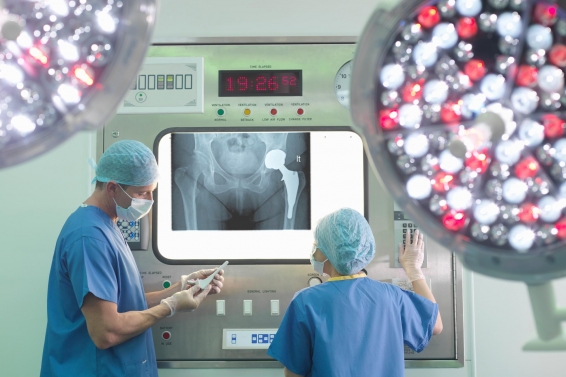
A surgeon performs hip replacement with a large (6- to 8-inch) incision or minimally invasive surgery with 1 or 2, smaller incisions. The surgeon removes the diseased bone tissue and cartilage from the hip joint and replaces it with new, artificial parts. Surgeons use different types of prostheses (implants)—combinations of metal, ceramic and plastic parts. Your doctor will choose the type of prosthesis that best suits your needs.
You may have general or regional anesthesia, and can expect to stay in the hospital for 3 to 5 days. A positioning splint, such as a foam pillow placed between your legs, may be used to protect your hip during early recovery.
You’ll need to limit your movement following hip replacement. This means you may need help with household work and other daily activities during recovery. Most people are able to resume light daily activities within 3 to 6 weeks after surgery.
Physical therapy is an essential part of recovery. Gradually, you’ll regain hip mobility and strength with less pain. Full recovery times range from 3 to 6 months.